Why Is a Pile Cage Machine Essential for Modern Construction?
Sep 21, 2026
A pile cage machine is no longer a luxury on a modern job site — it is a production necessity. As infrastructure projects grow in scale and complexity across the United States, the demand for structurally precise, rapidly fabricated reinforcement cages has intensified. A pile cage machine automates the winding and welding of longitudinal rebar and spiral stirrups into cylindrical cages used in deep foundation systems. By replacing manual fabrication with CNC-controlled automation, contractors achieve tighter dimensional tolerances, faster throughput, and measurable reductions in labor dependency — all of which directly impact project profitability and schedule compliance.
Understanding Pile Cage Machines and Their Role in Construction
What Is a Pile Cage Machine and How Does It Work?
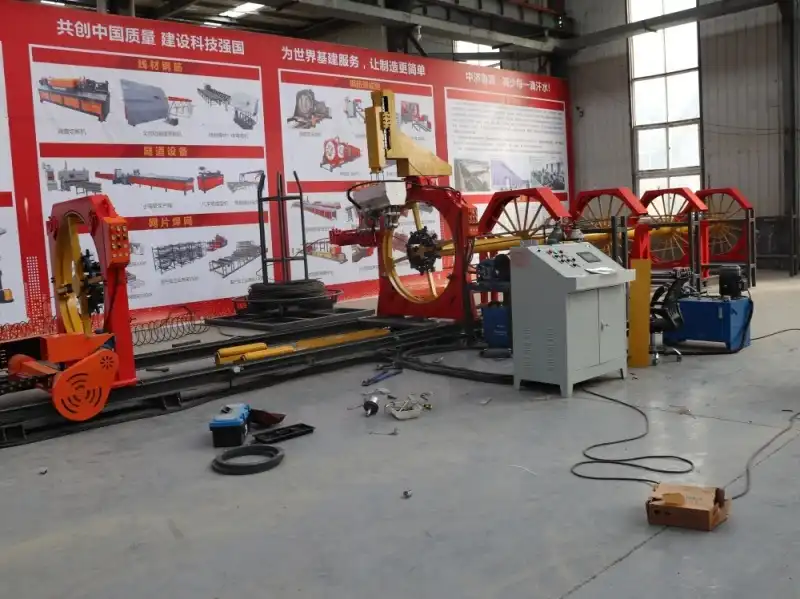
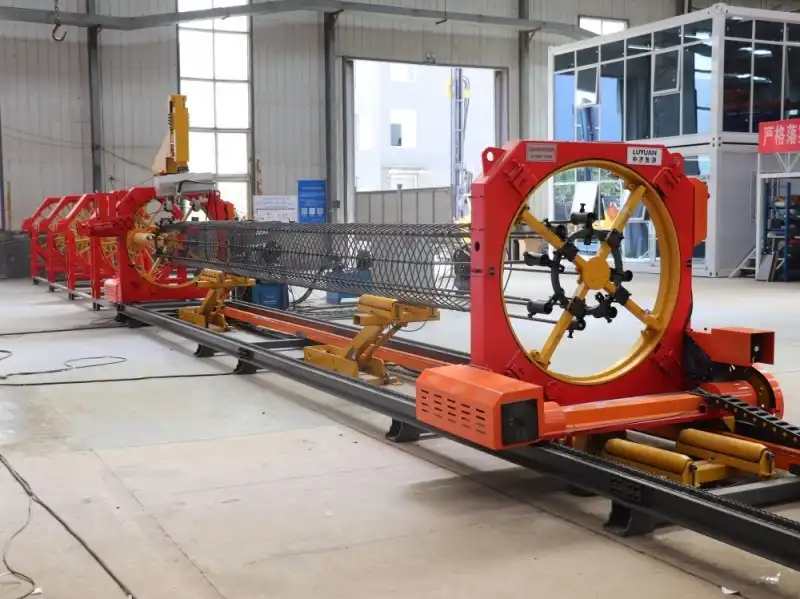
A reinforcement cage welding workstation has a rotating drive platform, a longitudinal travel mechanism, and an automated welding head that ensures that the main bars are placed at the same time that the spiral stirrups are continuously wound. With millimeter-level precision, the PLC tablet control system decides the winding pitch, the speed of the welding, and the shape of the cage. Operators set the cage's width, length, and bar spacing straight through the interface, and the machine does the rest of the work with little help from the operator. One person can run the whole line, which changes the economics of labor in cage production in a big way.
Zhongji Luyuan's LYZD-GJL2500 type can handle cage diameters between φ700 mm and φ2500 mm, cage lengths of up to 12 meters, main bar diameters between φ18 mm and φ40 mm, and spiral bar diameters between φ8 mm and φ16 mm. The system runs on a standard 380V, 50Hz, three-phase power supply and has a total installed power of 30 kW. The welding power can reach 100 kW. The gas-shielded welding method ensures that there are no missed or fake welds and that the fusion bonds are constant. This is a very important structural condition for bridge and high-rise building deep foundation piles.
The machine can work with both single and double main bar layouts, as well as single and double spiral bar layouts. The space between the spiral bars can be changed up to 300 mm. Its 30 m × 8.5 m size makes it easy to fit into normal fabrication buildings, and its modular frame design makes it easier to do repairs and replace parts.
Comparing Pile Cage Machines to Traditional Methods and Alternatives
How Does Automation Compare to Manual Cage Fabrication?
When rebar cages are made by hand, teams of workers tie stirrups to longitudinal bars by hand. This is a slow, physically demanding process that can lead to uneven pitches. Human mistake rates of 5–15% have been found in studies on construction efficiency engineering. This means that putting together rebar by hand will cost more money and run the risk of not meeting building codes, whereas a pile cage machine gets rid of these problems by controlling each weld with a computer program.
In ideal conditions, a trained manual team could finish one or two cages per shift. The LYZD-GJL2500, on the other hand, can deliver 13 cages per 10-hour shift for 12-meter parts, which completely changes how the project schedule is planned. In load-bearing pile applications, weld consistency is just as important as speed. The bond strength is the same at every intersection thanks to gas-protected welding technology. This meets the structural standards needed for highway bridges, metro station foundations, and nuclear plant base structures.
It is also important to understand the difference between a pile cage machine and a regular rebar cage machine. Rebar cage tools usually work with smaller sizes that are best for use in columns or beams. Pile-specific equipment is made for heavier gauge bars and larger diameter cages. For example, the LYZD-GJL2500 has a maximum diameter of φ2500 mm, which is big enough for bridge pier and deep-bored pile projects.
Selecting the Right Pile Cage Machine for Your Business Needs
Key Procurement Criteria for Infrastructure Contractors
There are more than just the purchase price that need to be taken into account when choosing the right reinforcement cage production system. Before making a decision about a supplier, procurement teams and equipment managers should look at these main factors:
- Production capacity alignment: The machine's rated output — 13 cages per 10-hour shift — must be benchmarked against your project's peak cage demand. Over-specified equipment ties up capital; under-specified equipment creates schedule bottlenecks.
- Automation and control sophistication: A PLC + touchscreen control interface reduces operator training time and enables rapid specification changeovers. Servo control systems deliver higher repeatability across long production runs, which matters greatly on large-volume contracts.
- Customization availability: Double main bar configurations, variable pitch programming, and adjustable cage diameters (φ700–φ2500 mm) provide the flexibility to serve multiple project types from a single machine investment.
- Supplier certification and after-sales infrastructure: Equipment reliability post-delivery depends on the supplier's technical support capacity. Evaluate training programs, spare parts availability, and remote diagnostics capabilities before signing any purchase agreement.
These factors together decide if a capital investment gives the expected return on investment (ROI) within the expected payback time. The evaluation risk is greatly reduced when you buy from a reputable rebar cage machine manufacturer with documented project references.
When looking at buying vs. leasing a pile cage machine, big companies working on multi-year building projects usually choose to buy because the economics of the per-cage cost are much better when high utilization rates are used. Leasing may be a better fit for smaller manufacturing shops that work on a variety of projects at different times.
Maximizing Pile Cage Machine Performance and Longevity
Operational Best Practices That Protect Your Investment
As much as the quality of the equipment itself, consistent machine performance relies on how well it is maintained. Lubricating the drive chains, guide rails, and rotating table bearings every day keeps them from wearing out faster when they are used continuously for production. The required level of accuracy in dimensions set by structural engineering standards is maintained by monthly encoder correction and welding electrode inspection.
The reinforced heavy-duty high-strength steel frame of the LYZD-GJL2500 is built to last for a long time in tough site conditions. Because it is built in a modular way, individual parts can be changed without taking the whole thing apart. This makes unexpected downtime much less likely. When fixing welding problems, the PLC system records operational factors that help quickly find the root cause. Zhongji Luyuan's technical support team then contacts the maker directly to help fix the problem.
Following OSHA safety rules for construction tools and getting foreign CE certifications protects the people who work on the machines. Constantly teaching operators how to use the touchscreen CNC interface lowers the chance of making mistakes when entering parameters that could affect the shape of the cage.
Future Trends and Innovations in Pile Cage Machine Technology
IoT Integration and Smart Manufacturing Are Reshaping the Industry
The next wave of automated cage welding systems is quickly moving toward monitoring output through the Internet of Things. Cloud-based dashboards receive real-time data from servo motors, welding heads, and tension sensors. These dashboards let production managers see quality metrics, output rates, and the health of their equipment from anywhere. Predictive maintenance programs that are powered by AI look at patterns of vibration and temperature to find wear conditions before they lead to breakdowns. This changes maintenance from being reactive to being proactive.
With remote testing, equipment manufacturers can find and fix software problems without sending a field worker, which cuts response times from days to hours. As environmental rules get stricter in the U.S. building industry, energy-efficient electric drive systems and better control of welding power are no longer seen as extras but as necessities. Zhongji Luyuan is continuing to put money into research and development, which ensures that its products can meet these changing scientific and legal standards.
Conclusion
Automated fabrication of reinforcement cages has gone from being a competitive edge to being standard practice in large-scale building projects. Modern rebar cage welding workstations, built around a pile cage machine, are essential for contractors working on complicated, high-volume projects because they are accurate, use gas-shielded welding, and can be used by a single person. Equipment like the LYZD-GJL2500 makes a real difference in the quality of the structure, the amount of work that needs to be done, and the cost of labor. These are all things that have a direct effect on how profitable a project is and how happy the clients are. The most important thing for getting the most out of this investment in the long run is still choosing the right seller with proven technical skills and quick response times for after-sales help.
FAQ
How many operators does a pile cage machine require per shift?
The LYZD-GJL2500 operates with one person per shift. The PLC + touchscreen control system automates the winding, welding, and pitch spacing functions, reducing the need for multiple skilled workers.
Can the machine handle different cage diameters within the same production run?
The adjustable template system accommodates cage diameters from φ700 mm to φ2500 mm. Specification changeovers are executed through the touchscreen interface, minimizing downtime between runs.
What welding method does the machine use, and why does it matter?
Gas-shielded welding produces consistent, high-integrity fusion bonds at every rebar intersection. This eliminates missed welds and false welds — structural defects that are unacceptable in pile foundation applications.
What is the recommended maintenance interval?
Daily lubrication of drive components and monthly calibration of the encoder and welding electrodes maintain production accuracy. The modular frame design simplifies access to wear parts.
Is the machine customizable for non-standard project requirements?
Double main bar and double spiral bar configurations are available, along with customizable rebar diameter ranges and cage lengths, making the equipment adaptable to diverse engineering specifications.
Partner with Zhongji Luyuan for Your Next Pile Cage Machine Project
Zhongji Luyuan, a trusted pile cage machine supplier with verified partnerships across China Railway, China State Construction, and major international markets, offers the LYZD-GJL2500 with full customization, professional commissioning, and long-term technical support. Contact our team at sales2@shandongluyuan.com or visit shandongluyuan.com to request a product demonstration or project-specific consultation today.
References
1. American Concrete Institute. ACI 318-19: Building Code Requirements for Structural Concrete. American Concrete Institute, 2019.
2. Nawy, E. G. Reinforced Concrete: A Fundamental Approach. Pearson Education, 2009.
3. Construction Industry Institute. Automation and Robotics in Construction: Productivity and Safety Outcomes. University of Texas at Austin, 2020.
4. Das, B. M. Principles of Foundation Engineering. Cengage Learning, 2021.
5. McKinsey Global Institute. Reinventing Construction: A Route to Higher Productivity. McKinsey & Company, 2017.
6. International Federation for Structural Concrete (fib). fib Bulletin 40: FRP Reinforcement in RC Structures and Foundation Design Guidance. fib, 2007.