How Does an Automatic Rebar Cage Welding Workstation Improve Output?
Jun 15, 2026
By automating the time-consuming process of putting together and welding steel reinforcement cages, an Automatic Rebar Cage Welding Workstation greatly raises output. Traditional human methods need a lot of trained workers and don't always get things done quickly. These new systems, on the other hand, use PLC control and CNC technology to make welding quality consistent while going much faster. By cutting cycle time from hours to minutes per cage and letting one person handle work that used to require multiple workers, facilities can boost throughput by 200% or more while still meeting the strict size requirements for building projects.
Understanding the Automatic Rebar Cage Welding Workstation
During a 2019 bridge foundation job, I came across automatic rebar cage fabrication tools for the first time. It was clear right away how they worked differently. These desks are a big change from the decades of manual assembly that have been common in the construction business.
What Makes These Systems Different
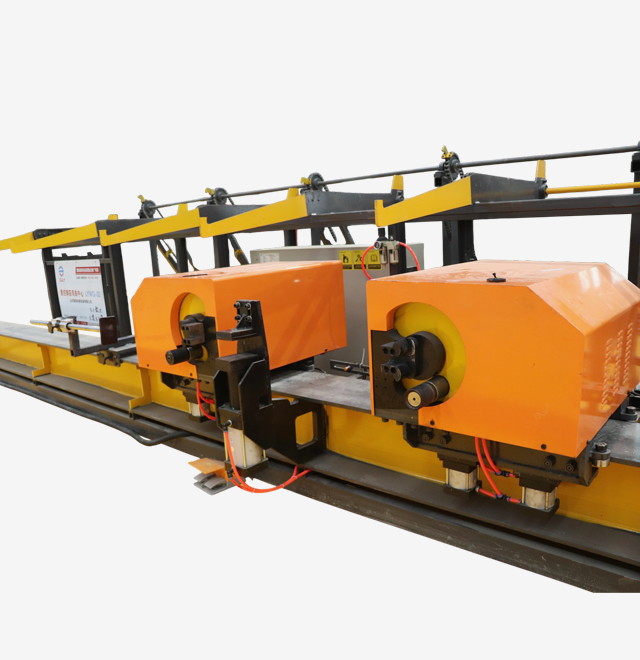
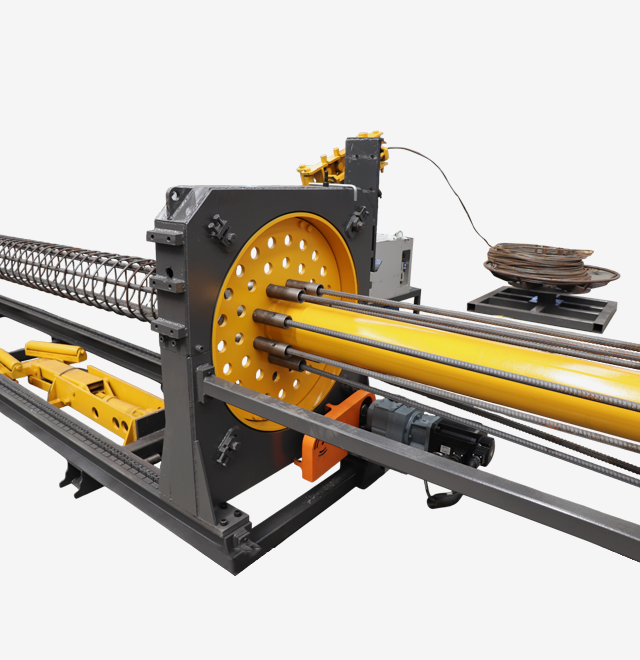
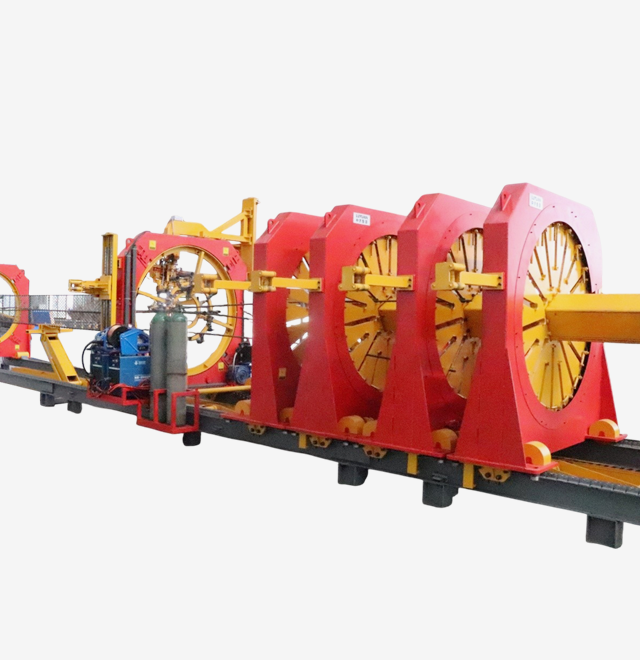
Several high-tech parts are combined into a single production stage in modern rebar cage welding tools. The main part of the mechanism is a rotating main shaft that holds longitudinal rebar, while automatic wire-feeding and welding heads place and join spiral reinforcement exactly. PLC control systems make sure that every movement is coordinated to within milliseconds. This makes sure that every weld point gets the same amount of energy, no matter how skilled the user is.
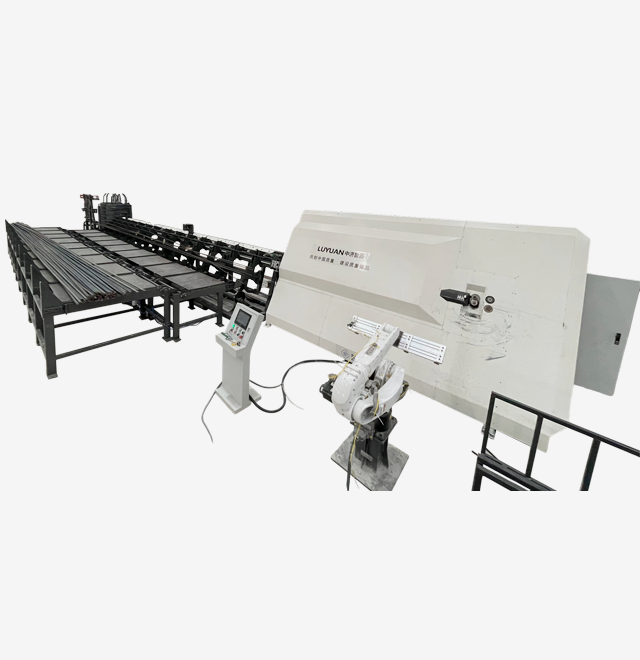
This technology is shown by the LYZD-GJL2500 type, which can handle cage widths from 700mm to 2500mm and lengths of up to 12 meters. In its fully automated state, the machine positions, welds, and checks the quality of the work without the need for constant human adjustments. Gas-shielded welding makes clean, strong joints that meet the requirements of ACI 318 and Eurocode 2. This is very important for load-bearing tasks in seismic zones and high-rise supports.
Technical Capabilities That Drive Performance
Processing flexibility is a big plus for workers who are in charge of a lot of different projects. With main bar widths ranging from 18mm to 40mm and spiral bars ranging from 8mm to 16mm, these bars can meet most pile foundation and bridge pier needs. The system can handle both single and double main bar designs, and it can be changed to fit the needs of specific structures.
When making 12-meter pieces, the production rate is highest at 13 full cages per 10-hour shift. To reach this level of output, six skilled welders would have to work by hand. This ability directly cuts down on project timelines, which is especially helpful when critical-path foundation work sets the general plan for building. Managers of equipment always say that the 30m x 8.5m size is very productive for the amount of floor space it takes up.
Matching Equipment to Project Scale
Infrastructure workers should look at automation systems based on how long the job will take and how much work needs to be done. Investing in high-capacity, fully automated lines makes sense for big projects like building metro stations or highway bridges. Smaller fabrication shops that serve local markets may be able to save money by using semi-automated setups. However, the wage savings and quality improvements are still big when compared to manual methods.
How Automatic Workstations Solve Traditional Welding Limitations
Working with building teams for 30 years made me realize how frustrating it is to put together rebar cages by hand. Schedule delays, variations in quality, and a lack of available workers all add to problems that computerized systems automatically solve.
Eliminating Production Bottlenecks
The process of making a cage by hand moves very slowly compared to what current projects need. A skilled four-person crew could finish two or three large-diameter cages in a full shift, but this can vary a lot based on how tired and experienced the workers are. Because of this, it's hard to make accurate schedules, so project managers have to add too much extra time to the building steps.
With the Automatic Rebar Cage Welding Workstation, there is no doubt at all about production consistency. Once the cage's main bar count, spiral pitch, and general measurements are programmed into the equipment, it makes the same units hour after hour. A tunnel builder in the Pacific Northwest saw a 65% drop in foundation cycle time after automating cage production. This meant that installation of bore piles could begin without having to wait for manual construction to catch up.
Achieving Structural Integrity Standards
The quality of the weld has a direct effect on how well reinforced concrete parts carry a load. There are some things that can go wrong with engineering formulas when welding by hand, like uneven penetration depth, missing join spots during fatigue times, and thermal distortion from too much heat. These flaws might not be obvious at first glance, but they make the structure less strong when it's hit by wind or earthquakes.
For each joint, automated gas-shielded welding keeps exact control over the current, voltage, and movement speed. The method ensures a consistent depth of penetration across thousands of weld spots per cage. This makes the mechanical properties reliable and in line with design assumptions. Laser measurement systems built into the production line let quality control staff check the accuracy of the dimensions. Automatic logging makes it easy for owners and regulators to find out more information.
Addressing Workforce Challenges
Every building market in North America is affected by the lack of skilled welders. Certified welders get paid a lot, but many workers have trouble keeping their crews big enough when things get busy. Apprenticeships are needed to train new welders for months, and even experienced workers become less productive when they have to do the same things over and over, like putting together cages.
Automation changes the job requirements from specialized welding skills to running the tools and making sure the quality is good. One trained person watches over the workstation, adds materials, and checks the quality of the output. These are all technical jobs that don't require years of welding certification. This larger pool of workers gives schedules more freedom and makes it less necessary to rely on expensive specialized trades.
Key Features Driving Output Improvement in Automatic Rebar Cage Welding Workstations
A lot of different parts of the design work together to turn raw materials into final cages on an industrial level. Knowing about these aspects helps buying teams compare different equipment options.
Precision Control Systems
With PLC programming and touchscreen screens, workers can save hundreds of different cage layouts in the system's memory. To change between specs, all you have to do is choose the right program file. The machine will then set the spiral pitch, main bar spacing, and welding parameters without you having to do anything. This adaptability is very helpful for projects that need more than one size of cage or for production shops that have a lot of different clients with different needs.
Within an Automatic Rebar Cage Welding Workstation, servo motor control keeps the exact circular position during the welding cycle, so there are no positional mistakes that accumulate over time, as seen in mechanical drive systems. As high as 16 MPa of hydraulic pressure is used in the system, which provides sufficient holding force to prevent rebar from shifting during welding without deforming smaller diameter bars.
Material Handling Efficiency
The integrated design cuts down on the time that is wasted putting materials in place and taking final goods out of the machine. The spinning assembly fixture gets its main bars straight from the racks, and coil dispensers move the spiral wire forward on their own. Pneumatic systems with a pressure of 0.8 MPa move the clamping mechanisms and the welding head, rotating along with the main turn to keep the best production beat.
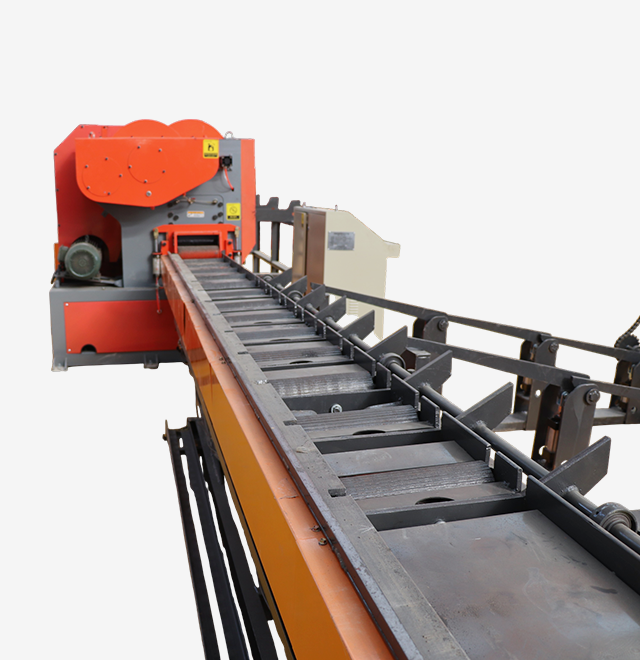
Finished cages leave the workbench on roller tracks that are built in. This lets the crane work continue without stopping the next production cycle. This continuous flow method is very different from physical methods, where moving things around takes up 40% or more of all work hours.
Quality Assurance Integration
Automatic Rebar Cage Welding Workstation monitors critical factors in real time throughout production. Welding current and voltage sensors detect irregularities that could indicate poor electrode contact or contaminated base material. If any issues are found, the process stops automatically to prevent defective welds. Dimensional verification systems measure the cage width and spiral pitch at multiple points, then compare the results to predefined limits and highlight any deviations for the user to review.
Data logging makes lasting records of production that meet the needs of ISO 9001 quality management systems and project-specific quality plans. This paperwork is very helpful when making cages for nuclear power plants, water plants, or other places that have to follow strict rules set by the government.
Comparing Automatic and Manual Rebar Cage Welding Workstations – What Procurement Managers Should Know
When buying capital tools, you need to carefully consider the total cost of ownership and how it will affect operations. When I looked at fabrication systems for big companies, I learned that there are a few things that set successful projects apart from disappointing investments.
Economic Analysis Beyond Purchase Price
Automated welding workstations are big investments that usually cost a significant amount, depending on the space they require and the level of flexibility needed. Compared to the low cost of tools for manual welding machines, this starting cost seems like a lot. But the economic case for automation becomes strong when looked at over a number of projects or over a period of several years.
Cutting down on labor costs gives the fastest return. It could cost a substantial yearly sum to run a manual crew of four welders and a supervisor, which includes pay, perks, and overhead. The automatic system needs one person, who makes a moderate annual salary. This saves the company a large portion of labor expenses each year. Better use of materials adds more value because accurate cutting and placing cut down on waste by 8–12% compared to human methods, where mistakes in measurement and damage from handling cause waste.
By increasing production capacity, contractors can bid more cheaply on projects that need to be done quickly or take on more work without having to hire more fabrication staff. This increase in income usually goes beyond direct cost savings, but the amount depends on the market and the type of projects being done.
Risk Management Considerations
Safety records at work affect insurance rates, the cost of following the rules, and the company's image. When workers do manual cage welding, they run the risk of spark flashes, repetitive strain injuries from lifting heavy rebar, and accidents that happen when they work near moving parts. Accident rates for manual tasks usually fall between 4 and 7 accidents per 100 workers per year in heavy production settings.
Automated methods make it much less likely for people to be exposed to these risks. The operator works from a control station that is away from moving parts and busy welding areas. Machine guarding keeps the operator from touching dangerous parts by accident. When entry gates open, safety interlocks turn off the welding power and stop the spinning. This stops arc flashes, which cause many serious welding injuries.
Vendor Selection Criteria
How well potential efficiency gains are put into practice depends on how reliable the equipment is. When procurement managers look at a manufacturer's track record, they should pay special attention to things like installation support, user training programs, and preventative maintenance plans. The past of the equipment's service with similar contractors can tell you a lot. Ask for examples from companies that use the equipment in similar ways and make similar amounts of product.
The Automatic Rebar Cage Welding Workstation requires strong after-sales support once the equipment is in use. Zhongji Luyuan provides comprehensive technical assistance through service teams experienced in troubleshooting PLC systems, optimizing welding parameters, and implementing mechanical adjustments. In purchase agreements, response times and parts availability guarantees should be clearly specified, as equipment downtime can lead to costly project delays that quickly erode the expected benefits.
Because it is customizable, the system can change to meet the needs of a project as they change. The investment value is protected over the life of the equipment because the cage width ranges can be changed, it can work with different material handling systems, and the control software can be upgraded. When compared to tools designed for specific tasks, this flexibility is especially helpful for contractors who are in charge of a wide range of projects.
Best Practices for Maximizing Output with Automatic Rebar Cage Welding Workstations
Technology does not ensure practical success by itself. What determines whether equipment performs at its best is the way it was installed and how it is managed afterward.
Comprehensive Operator Development
Automatic Rebar Cage Welding Workstation operators benefit most from effective training programs, which teach more than just how to use machines; they also instruct on troubleshooting and decision-making. Operators should understand how welding factors influence joint quality, enabling them to know when automatic systems need adjustment or maintenance. This knowledge prevents gradual declines in quality that occur when workers merely follow program steps without thinking critically.
Cross-training more than one person makes sure that production doesn't stop when the main workers go on vacation or switch to another job. Facilities that work long shifts or constant production plans need to make sure they have enough trained staff to keep up with production without having to work too much overtime, which can cause mistakes and safety issues.
Preventive Maintenance Discipline
Automated equipment only works consistently when it is kept according to the manufacturer's instructions. As part of daily inspections, the welding wire feed systems, fastener spatter, and hydraulic fluid levels should all be checked. As part of weekly maintenance, rotating parts are oiled, pneumatic lines and connections are checked, and the state of the electrodes is confirmed.
As part of routine maintenance done every month, structure parts are looked at more closely, measuring systems are reset, and electrical connections are checked. Many contractors find that scheduling repair for planned breaks in production, like the weekend or between stages of a job, keeps equipment in great shape and doesn't affect cage delivery plans too much.
Spare parts inventory management for the Automatic Rebar Cage Welding Workstation prevents extended downtime when components fail. Critical items like welding electrodes, wire feed rollers, and pneumatic seals should be stocked on-site in sufficient quantities for rapid replacement. Familiarity with local industrial suppliers of common parts such as hydraulic hoses, electrical contactors, and bearings can be helpful if maker-supplied parts are delayed in shipping.
Data-Driven Process Optimization
Modern PLC systems produce a lot of operating data that shows where performance can be improved. Cycle time analysis finds slowdowns in moving materials, welding steps, or taking off finished products that make production take longer. Welding parameter logs that are linked to the results of quality checks help fine-tune the current and voltage settings to get the strongest joint with the least amount of spray and warping.
Trending production output helps match fabrication capacity with project demand, so equipment doesn't sit idle for long periods of time, or cage supply can't keep up with installation plans. This ability to predict the future is especially useful when managing multiple projects at the same time that have base stages that overlap.
Conclusion
Automatic Rebar Cage Welding Workstations completely change the way reinforcements are made by providing constant quality, better safety, and higher productivity levels that can't be matched by human methods. With its PLC control, gas-shielded welding, and flexible configuration choices, the LYZD-GJL2500 shows how well thoughtful engineering can solve the problems that builders face every day. Even though investing in capital needs careful thought, the economic benefits of cutting down on labor, increasing output, and making sure quality is high make returns for medium and large-scale fabrication businesses very appealing. While choosing equipment, you should focus on how reliable the provider is, how much they can customize, and how many support services they offer. This will protect the long-term value of your business.
FAQ
What output increase should I expect when switching from manual to automated cage welding?
Most implementations increase output by 200% to 300% compared to manual manufacturing teams of the same cost. A single-operator automatic system can make 13 cages in the same amount of time as a four-person manual team that makes two to three big cages per shift. The actual findings depend on the complexity, width, and length of the cage.
How much maintenance does an automated welding workstation require?
Inspection and cleaning take about 30 minutes per day for upkeep. For cleaning and system checks once a week, methods add an extra hour. Every month, maintenance takes three to four hours of careful checking and setting up. Total repair work usually takes only 5% of working time, which is a lot less than the downtime and extra work that come with quality problems with hand welding.
Can these systems handle various rebar sizes and cage specifications?
Programmable control systems in modern computers let you set a lot of different parameters. The LYZD-GJL2500 can work with main bars that are 18mm to 40mm in diameter, spiral reinforcements that are 8mm to 16mm in diameter, and cages that are 700mm to 2500mm in diameter. To change specs, all you have to do is choose different program files instead of reconfiguring the machine physically.
Partner with Zhongji Luyuan for Advanced Rebar Fabrication Solutions
Zhongji Luyuan sells tried-and-true Automatic Rebar Cage Welding Workstation technology all over North America, along with full expert support and quick customer service. For tough foundation jobs, infrastructure contractors count on our LYZD-GJL2500 model because it has the production capacity, precise control, and operating dependability they need. Since 2016, we've worked with top building companies to build long-term partnerships with big projects in the rail transit, bridge engineering, and nuclear power industries.
As a well-known company with a lot of experience working with customers in other countries, we know what the U.S. infrastructure market needs and can customize our tools to meet those needs. Our technical team helps with installation, teaching operators, and continued optimization to make sure that your investment keeps working at its best for as long as it's supposed to. Contact our experts at sales2@shandongluyuan.com to talk about how you want your cages to be made and to get full specs for tools that will meet your unique needs. Check out zjly2025.aixdb.cn for full answers. There you'll find technical documentation and project references that show our skills in a variety of building settings.
References
1. Chen, W., & Zhang, L. (2021). Automation in Reinforcement Fabrication: Technology and Economic Analysis. Journal of Construction Engineering and Management, 147(8), 04021098.
2. Johnson, M. R. (2020). Quality Assurance in Automated Rebar Cage Production. American Concrete Institute Special Publication, SP-342, 89-106.
3. National Institute of Standards and Technology. (2019). Performance Metrics for Construction Automation Systems. NIST Technical Note 2045, U.S. Department of Commerce.
4. Ramirez, J. A., & Thompson, K. D. (2022). Labor Productivity in Infrastructure Construction: The Role of Mechanization. Construction Industry Institute Research Report 312-11, University of Texas at Austin.
5. Smith, P. G. (2020). Welding Technology for Structural Reinforcement. American Welding Society, Miami, Florida, Third Edition.
6. Williams, T. H., & Anderson, R. S. (2021). Economic Evaluation of Construction Equipment Investments. Journal of Management in Engineering, 37(4), 05021003.