How Does LYWQ-50 Help Contractors Handle Large-Diameter Rebar Bending Requirements?
Oct 23, 2026
Large-diameter rebar bending is one of the most demanding tasks in modern construction. The CNC Horizontal Bending Center LYWQ-50 directly addresses this challenge by delivering 500kN of hydraulic bending force through a precision-controlled horizontal platform. This machine processes heavy-gauge steel bars with angular accuracy of ±0.3°, automates multi-step bending sequences, and significantly reduces manual labor on site. Whether you are managing a highway bridge project or a metro tunnel contract, this machine keeps your production schedule on track without compromising dimensional accuracy.
The Challenges of Large-Diameter Rebar Bending for Contractors
Large-diameter steel bars—typically #11 bars and above—are notoriously difficult to process. Their high stiffness generates enormous resistance during forming, and without proper equipment, the results are often inconsistent bend angles, surface cracking, or material deformation at the bend radius.
Inherent Material Resistance
Heavy rebar does not bend freely. The springback effect—where the bar partially returns toward its original shape after the bending tool releases—causes angular deviation if not compensated for. Manual operators rarely calculate springback correctly across high-volume production runs, leading to repeated rework.
Limitations of Traditional Vertical Machines
Vertical bending machines rely on gravity to position and support the workpiece during forming. For long, heavy bars, this creates sagging between the support points, which directly distorts the final bend geometry. Many contractors have documented material rejection rates above 8% when using conventional vertical equipment on bars larger than 32mm in diameter.
Cost and Schedule Consequences
Each rejected or reworked bar adds both material cost and labor time. On a large infrastructure project—such as a highway interchange or a rail viaduct—rebar waste compounds quickly. A single week of processing delays due to equipment failure or chronic rework can set back the entire structural phase of a project, triggering penalty clauses and budget overruns.
How the LYWQ-50 CNC Horizontal Bending Center Addresses These Challenges
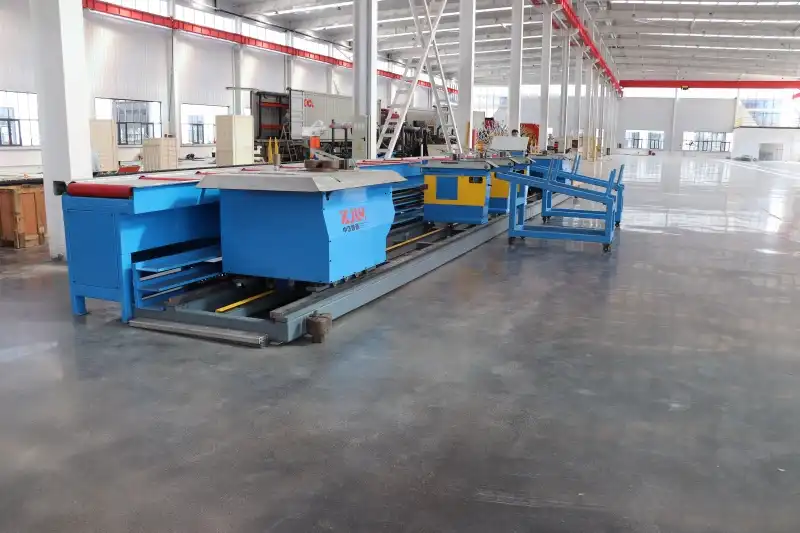
A horizontal closed-loop frame structure was used to make the LYWQ-50. This gives it more strength than C-frame or vertical folding options. During the whole bending cycle, the piece of work lies flat on the worktable. This stops gravity sagging and keeps the bar geometry fixed from the beginning to the end.
Automatic Springback Compensation
The industrial-grade PLC control system of the machine has a library of material factors built right in. After the operator types in the bar's grade and diameter, the system figures out the correct over-bending angle to reach the desired final angle after springback. This gets rid of the need to make changes by trial and error and keeps the angle accuracy within ±0.3° between production runs.
CNC Multi-Step Programming
The CNC Horizontal Bending Center LYWQ-50 CNC interface supports multi-step bending programs. This means that operators can set up complicated bar shapes like stirrups or spiral ties ahead of time and have the machine do the rest. The system works with standard structural detailing software used by engineering firms because it can import DXF files or take direct coordinate input.
Reduced Labor Dependency
Here are the main ways this machine helps contractors do their jobs better:
- Automated bending cycles reduce the number of operators needed per shift from three or four workers to one, directly cutting per-unit labor cost on high-volume rebar fabrication lines.
- Servo-controlled backgauge positioning achieves ±0.1mm repeatability, which means every bar in a batch matches the same dimensional specification without manual measurement between pieces.
- Heat-treated Cr12MoV alloy dies maintain surface finish quality and resist wear over long production cycles, reducing die replacement frequency.
Because of these benefits, companies working on big building projects that use continuous fabrication tools can lower their costs and get more work done.
Comparative Analysis: LYWQ-50 vs. Other CNC Bending Centers
When the diameter of the workpiece goes over 32mm, not all CNC bending centers work the same. The LYWQ-50's horizontal frame design gives it a structural edge that vertical options can't match when heavy loads are present.
Horizontal vs. Vertical Frame Performance
The bending stress is spread across a cantilevered C-frame in vertical machines. This frame bends a little when it's under the most load. This deflection adds up over time as angle error. The LYWQ-50's horizontal closed-loop frame evenly spreads force, keeping the die aligned at less than 500kN without any noticeable frame flex. It has been shown over and over again by machine tool manufacturers that horizontal frame benders make tighter angle tolerances on bars larger than 28 mm than equivalent-tonnage vertical models.
Energy and Space Efficiency
The LYWQ-50 has a hydraulic system that is set up to release energy efficiently instead of drawing the most power at its peak. If you work an 8-hour shift, you should check the hydraulic oil filter every six months, and you should change the whole oil every 2,000 hours. This model's repair period is longer than many others in the same tonnage class, which cuts down on downtime and running costs.
Long-Term ROI
When contractors switch from manual or semi-automatic bending to the LYWQ-50, they usually get their money back in the form of less wasted materials and time. The machine's manufacturing process is in line with CE and ISO 9001 standards, and during the factory acceptance inspection, there is a 24-hour hydraulic stability test protocol. This gives procurement teams written proof of the quality of the production before it is shipped.
Technical Specifications, Maintenance, and Troubleshooting of LYWQ-50
Key Technical Parameters
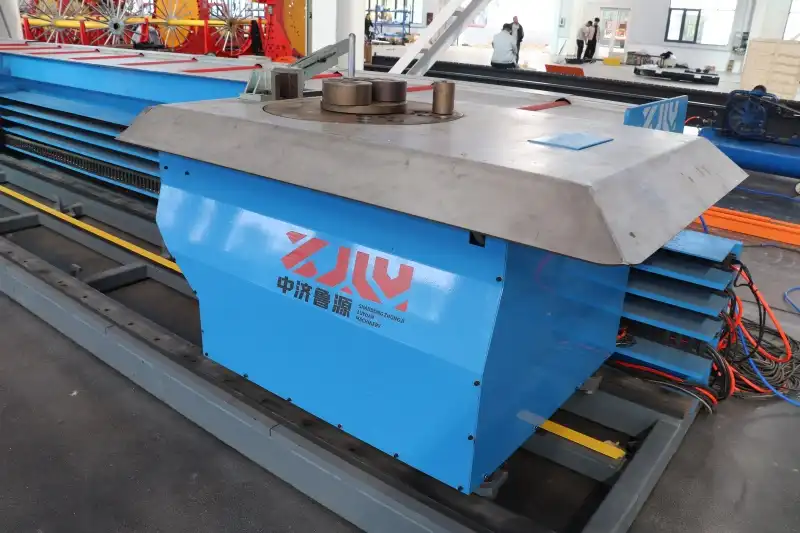
The CNC Horizontal Bending Center LYWQ-50 has a hydraulic pressure of 500kN, which is equal to 50 tons. It can work with steel bars that are up to 20 mm thick and 200 mm wide. The bending angle is accurate to within 0.3°, and the backgauge positioning is accurate to within 0.1mm. The CNC control box has an RJ45 Ethernet port and works with Modbus TCP/IP, which lets it connect to MES systems at the plant level in Industry 4.0 settings.
Recommended Maintenance Schedule
Between major service intervals, routine maintenance keeps the machine running at its best. It is recommended that operators check the stability of the hydraulic pressure once a month, the concentricity of the dies every three months, and the CNC calibration process after every change of tools. If the pressure readings or encoder errors aren't normal, the built-in diagnostic display lets you know before they get worse and cause a mechanical failure.
Troubleshooting Common Issues
If there is a sudden change in angle on a batch of consistent material, the first thing that should be checked is the die alignment and clamping pressure, not the program parameters. If there are software mistakes, like wrong springback coefficients after changing the material grade, they can be fixed by choosing the right material profile again from the built-in database. If the hydraulic pressure keeps dropping after 6 months, it means that the filter is clogged and needs to be replaced right away to keep the valve response speed safe.
Procurement Considerations for the LYWQ-50
Shandong Zhongji Luyuan Machinery Co., Ltd. has worked with China Railroad, China State Construction, and China Communications Construction to provide rebar processing equipment to contractors in almost 100 countries. The business began in 2016 with 50 million yuan in listed capital, and it has a full network of service providers for after-sales care.
Purchasing Channels and Delivery
The LYWQ-50 can be bought through Zhongji Luyuan's official network of foreign dealers. Before they place an order, procurement teams can ask for thorough technical specs, factory acceptance test results, and project documents that they can use as a guide. International buyers can choose from standard arrival times and CIF shipping terms.
After-Sales Support and Training
Each machine comes with instructions on how to set it up, help with commissioning it on-site, and training materials for the operator. You can get service contracts that include regular maintenance visits and priority parts delivery. Warranty terms and extended service agreements can be changed based on the size of the job and the length of the deal.
Financing and Customization
Financing choices and lease-to-own options are available for people who qualify. Zhongji Luyuan's engineering team can support customized machine setups based on project needs. For example, they can change the lengths of worktables to fit different bar sizes.
Conclusion
Large-diameter rebar bending demands precision, consistency, and the mechanical force to handle stiff high-grade steel without compromise. The CNC Horizontal Bending Center LYWQ-50 delivers all three through its horizontal closed-loop frame, automatic springback compensation, and CNC multi-step programming. Contractors running high-volume infrastructure projects gain measurable reductions in labor cost, material waste, and processing time. Backed by Zhongji Luyuan's manufacturing experience and international service network, this machine represents a practical, well-documented investment for any contractor serious about rebar fabrication performance.
FAQ
What is the maximum rebar diameter the LYWQ-50 can process?
Workpieces up to 20 mm thick and 200 mm wide can be used with the LYWQ-50. Peak angular accuracy of ±0.3° is maintained at up to 15mm thickness on T2 copper grade equivalents for high-precision applications. Performance changes depending on the hardness of the material and the grade of the bar.
Why does a horizontal design outperform a vertical bending machine for heavy bars?
Horizontal machines keep the piece flat on the worktable during the whole bending process. This keeps long bars from sagging due to gravity. Vertical machines use cantilever support, which lets the bar bend under its own weight. This causes angle distortion that gets worse when a lot of them are made at once.
What are typical maintenance costs and downtime for this machine?
In normal single-shift operation, the major planned cost is to change the hydraulic oil filter every six months and the oil completely every 2,000 hours of use. The onboard diagnostic system sends out early signs of problems so that the machine doesn't shut down without planning to. This keeps the annual repair downtime for this class of equipment well below the average for the industry.
Does the LYWQ-50 support integration with plant management systems?
Yes. The machine has an RJ45 Ethernet port and supports the Modbus TCP/IP protocol, so it can work with MES and Industry 4.0 monitoring platforms.
Get a Direct Quote from Zhongji Luyuan for the LYWQ-50
Infrastructure companies and rebar handling centers all over the world can buy the CNC Horizontal Bending Center LYWQ-50 from Zhongji Luyuan. We are ready to help you with your procurement process. We have a full foreign service network and project references for high-speed rail, highway, and bridge building. For details on prices, delivery times, and specifications, please email sales2@shandongluyuan.com or visit shandongluyuan.com.
References
1. American Concrete Institute. ACI 318-19: Building Code Requirements for Structural Concrete. ACI, 2019.
2. Concrete Reinforcing Steel Institute. CRSI Manual of Standard Practice, 29th Edition. CRSI, 2020.
3. International Federation for Structural Concrete. fib Model Code for Concrete Structures 2010. fib, 2013.
4. American Institute of Steel Construction. Steel Construction Manual, 16th Edition. AISC, 2022.
5. National Institute of Standards and Technology. NIST Technical Note 2073: Automated Fabrication Systems in Construction. NIST, 2020.
6. Engineering News-Record. Special Report: Automation and Prefabrication in Infrastructure Construction. ENR, 2023.